
Uriel da Costa
A Specimen of Herotech Treasure
A Historical Journey In Questioning Authority
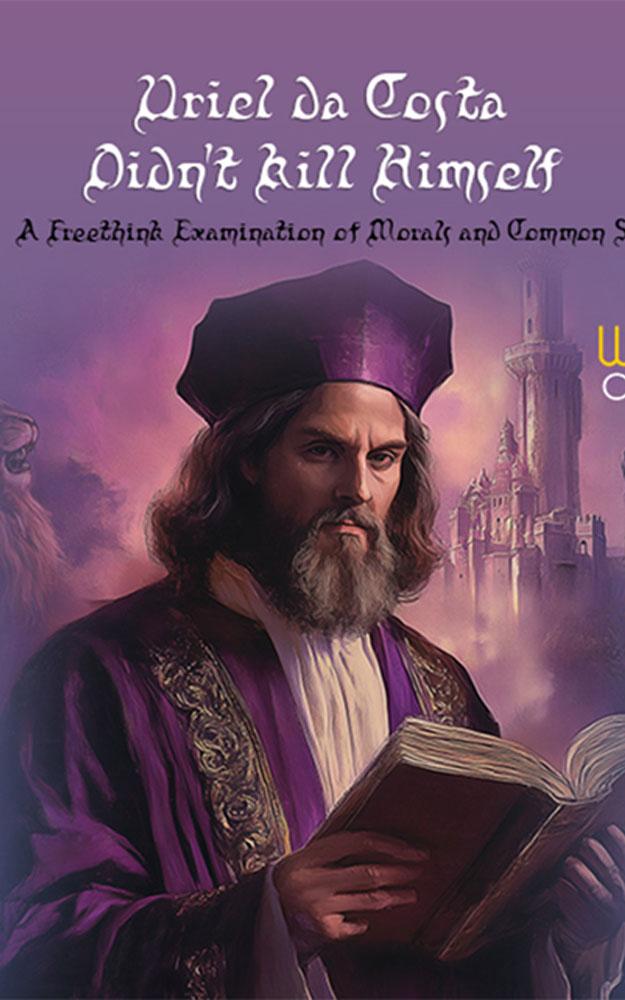
About the Book
Uriel da Costa Didn't Kill Himself: A Freethink Examination of Morals and Common Sense explores the author's personal journey into the Curiel / קוריאל / da Costa lineage while uncovering long‑obscured truths about the life and tragic fate of Uriel da Costa.
This book argues that Uriel da Costa's death was not a suicide but the result of oppressive forces within his religious community—forces that silenced dissent, punished independent thought, and erased inconvenient truths. Through historical research, family lineage, and personal reflection, the author shows how Uriel’s story mirrors many modern examples of abuses of institutional power.
About the Author
Wendy Coriell is a multidisciplinary creator who describes herself as the "Girl of Many Tech Trades." Establishing her studio, "World Wide Wendy," in 1999, she has evolved from a web designer to a specialist in Artificial Intelligence and Blockchain technology.
As a direct descendant of the Curiel / da Costa lineage, Wendy brings the same herotech questioning spirit of her ancestor Uriel da Costa to her work. She leverages modern Web 3.0 technology to recover lost narratives, blending rigorous historical research with the immersive storytelling of the digital age.
The Architects: The Curiel & Da Costa Empire
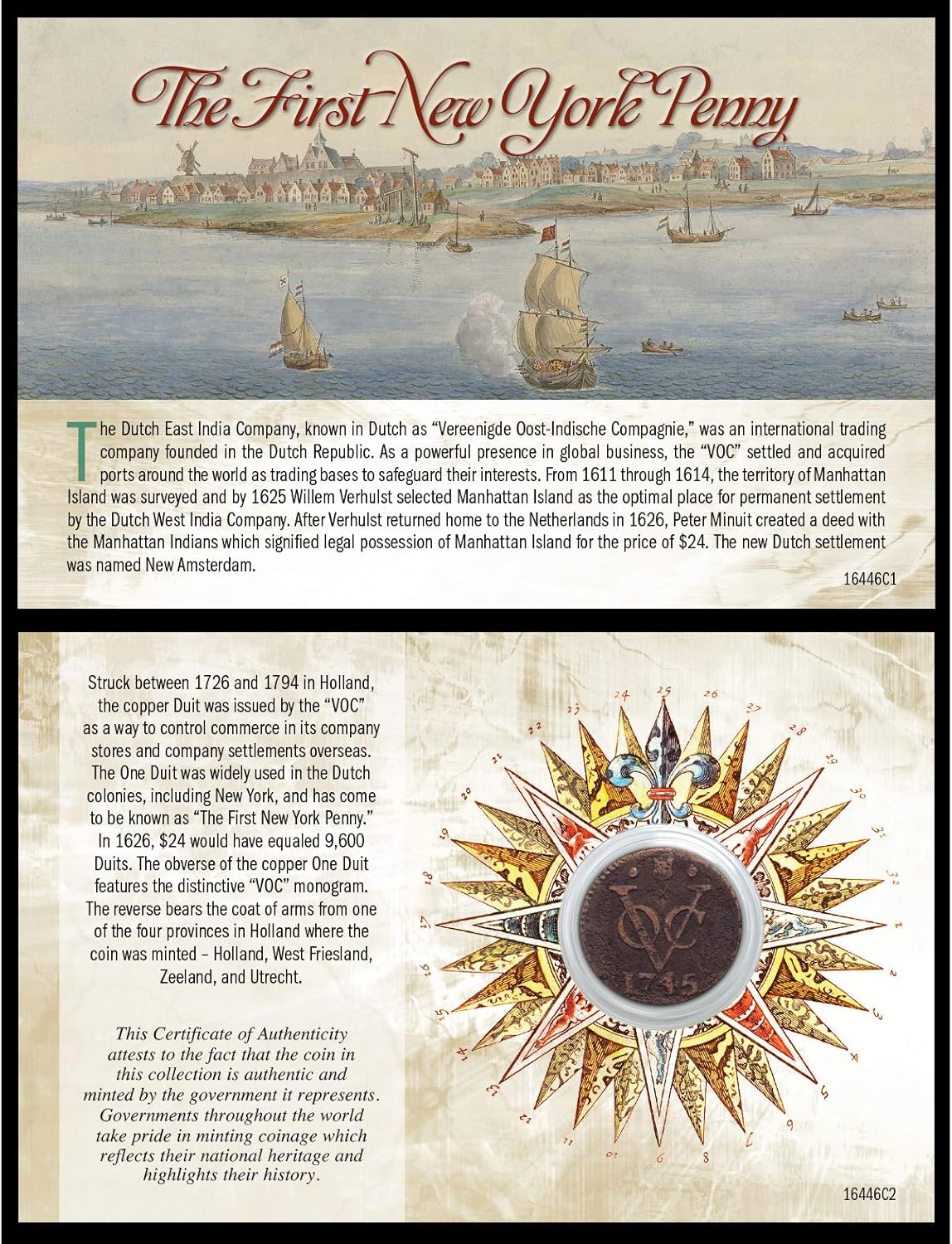
The history of the "New York Penny" (VOC Duit) is inextricably linked to the massive Dutch trading empires that dominated the 17th century. The Curiel / Da Costa family were not merely employees of these empires; they were elite merchant-bankers and major shareholders who helped finance the very fleets that carried these coins.
Jacob Curiel (also known as Duarte Nuñez da Costa) was one of the largest shareholders of the Dutch West India Company (WIC). This company controlled trade in the Americas and governed New Amsterdam (modern-day New York). The "Duit" coins, originally minted by the VOC for trade in the East Indies, were imported to the Americas to solve a currency shortage in the fledgling colony.
It was the WIC—the very company Wendy's ancestors owned a stake in—that authorized this transfer. This copper coin is not just a piece of currency; it is a physical artifact of a global network built by Sephardic refugees who turned exile into empire. It represents the intersection of the East India and West India trades, both of which the Curiel family helped architect.
The Combined Lineage: Curiel, Da Costa & Coriell
The names Curiel, Da Costa, and Coriell appear distinct, but they are branches of the same Sephardic Jewish lineage originating in Coimbra, Portugal. This family’s history is a map of the Diaspora—from the fires of the Inquisition to the forests of New Jersey.
The family traces back to the Curiel family of Portugal. During the Inquisition, many were forced to convert to Christianity, adopting Portuguese surnames like Da Costa or Nuñez da Costa. In the 17th century, members of the family escaped to Amsterdam and Hamburg, where they openly returned to Judaism. Notable figures include the philosopher Uriel da Costa and his brother Joseph da Costa, who was an early settler in New Amsterdam (New York).
By 1702, a man named Abraham Coriell was recorded in Piscataway, New Jersey. For generations, family lore cited him as a French Huguenot. However, modern Y-DNA studies have confirmed a direct male-line ancestry connecting the New Jersey Coriells to the Sephardic Curiel/Da Costa line. The name "Coriell" is likely the Anglicized spelling adopted by these refugees after they arrived in the English colonies, allowing them to survive and thrive in a new world.
Family: Coriell Relations & Memories
Vernell Coriell
A notable family member. Vernell W. Coriell founded the Burroughs Bibliophiles with his wife
Rita. He published the Burroughs Bulletin and the Barsoomian Bazaar. He also originated the
House of Greystoke club. Coriell served in World War II with the 105th Parachute Battalion. In
his youth, he worked as an acrobat in vaudeville and at fairs and circuses, along with his
family.
Vern Coriell on Fancyclopedia.
Carl Yale Coriell Jr.
(Author's father) Carl Yale Coriell Jr. served in the U.S. military and took part in Operation
Crossroads (Bikini Atoll).
In Memory of Carl Y. Coriell Jr..
Imogene Snyder Coriell
(Author's grandmother) Imogene was the first civilian employee of the U.S. Air Force in 1942. She
was a past worthy matron of the Eastern Star, Mobile, AL, and a member of Fulton Heights United
Methodist Church of Mobile.
In Memory of Imogene L. Coriell.
Imogene Laverne Coriell Chamberlin Zavodny
(Author's aunt) Known affectionately within the family, Imogene Laverne was a cherished link in
the Coriell chain. She preserved family connections and memories for the next generation.
In Memory of Imogene Laverne Coriell Chamberlin
Zavodny.
Clyde Coriell
(Author's Uncle) Clyde Coriell had a good job working for God as Methodist Minister at Rainbow Mennonite Church
In Memory of Clyde Coriell.
Kabbalah & The Sephardic Soul
The Curiel and Da Costa families lived during the golden age of Kabbalah—Jewish mysticism. After the trauma of the expulsion from Spain and Portugal, many Sephardic Jews turned to the mystical teachings of the Zohar and Isaac Luria (the Ari) to find meaning in their suffering.
In Amsterdam, where the Curiels flourished, Kabbalah was not just study; it was a spiritual lifeline. It offered a framework where the "broken vessels" of the world could be repaired (Tikkun Olam). This mystical tradition runs deep in the lineage, offering a counter-narrative to the rigid dogmatism that persecuted freethinkers like Uriel da Costa.
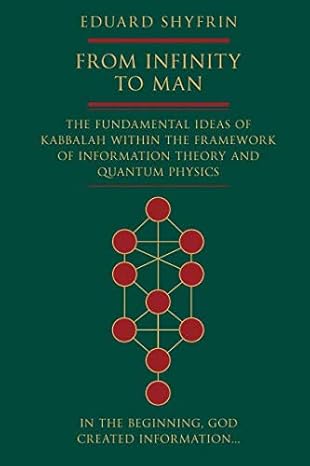
From Infinity to Man: The Fundamental Ideas of Kabbalah Within the Framework of Information Theory and Quantum Physics
Sefaria
A Living Library of Jewish Texts.
Explore Texts